When the world needed one.



Role:
Product Design Lead
Team(s):
1 Designer
1 PO
8 Engineers
Timeline:
1 year
Impact:
>$8M in savings • UX adoption surge • Org-wide design principles
Outcomes
$8m
instantly saved
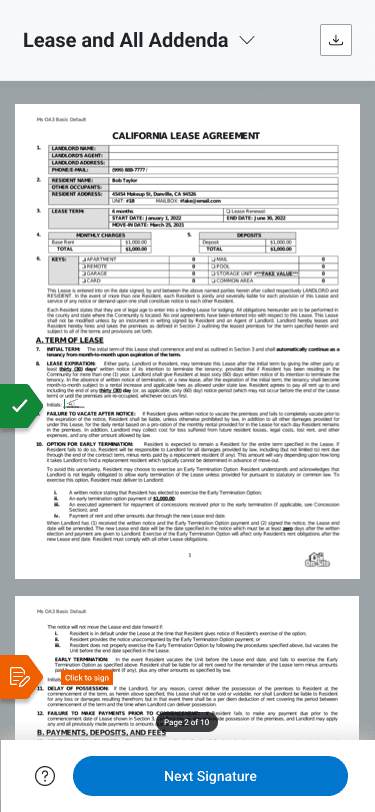
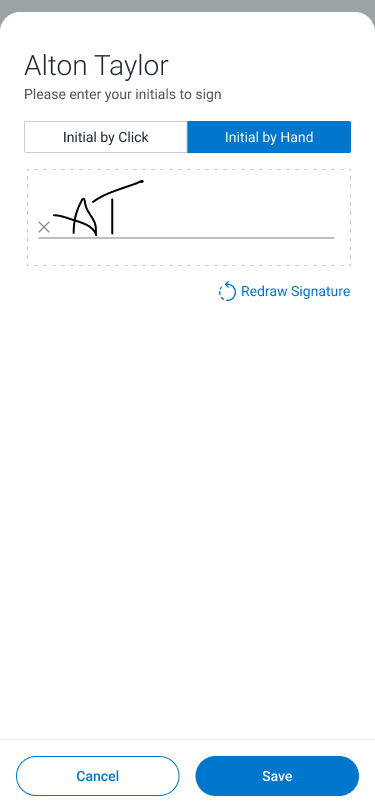
replacing DocuSign with a home-grown solution
24%
time on task
for renters, measured from reminder to completion
51%
usability score improvement
from pre-validation to production
Context
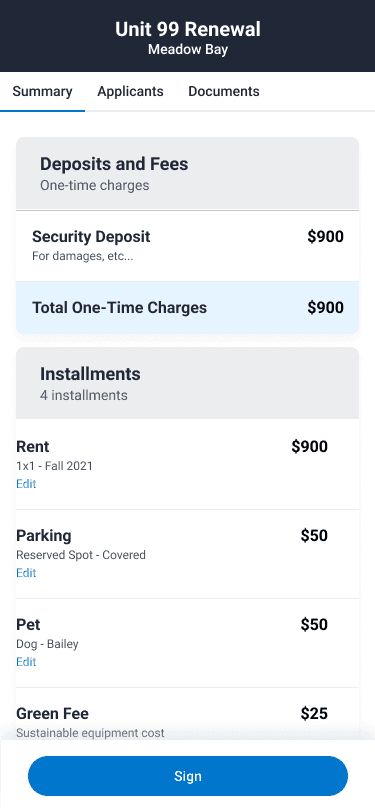
When COVID closed leasing offices overnight, RealPage's renewal process — built around in-person workflows and a DocuSign dependency — became an immediate liability. Renewals defaulted to drop-off only. The digital fallback was dated, fragmented, and tracking toward $8M in annual vendor spend.
What started as a scoped UI refresh became something larger: a full audit of how people actually renewed leases, where the system failed them, and what it would take to make it work without anyone setting foot in an office.
This wasn't a reskin. It was a rethink.
The PROBLEM
The existing renewal flow wasn't designed — it accumulated. Forms that scrolled for days. Inputs duplicated across screens. Agent responsibilities and renter responsibilities tangled together on the same pages, with no clear separation of what belonged to whom.
Auditing the flow made it undeniable: the information architecture assumed someone would be sitting across a desk explaining it. Remove that person, and the experience fell apart.


Strategic Insight
Research interviews with renters and leasing managers surfaced the same frustrations from both sides — too many steps, too much repetition, too little confidence that anything had actually been submitted. The audit matrix mapped every overlap and redundancy across both flows.

Research from auditing existing flows, legal compliance, and leasing manager interviews culminated in a matrix that exposed overlaps, redundancies and clear opportunities, not only to simplify but assisted in the generation of v1 of RealPage's lifetime renter value. (see below)
Two principles shaped
every decision that followed:
“Repetition IS pain”
If we already know something, don’t ask again. This challenged whether verification was legally required or just habit—and sparked key conversations around logical defaults, autofill, and progressive disclosure.
“Forms can be fun-ctional”
Forms are product surfaces, not admin tasks. Treat them with care and attention, and if they ever feel like administrative overhead, that's an opportunity for a different approach.
From there: unify applications and renewals into a single adaptive flow. Renters fill it out once, then review and renew — no starting from scratch. The same insight pushed a harder conversation internally, from "get the form done" to "design for the lifetime of the renter relationship."
I mapped the renter relationship as a lifetime, not a transaction. Five stages, each with its own triggers, motivators, and constraints.
- College student, vocational training, or early job market
- Often supported by family or loans
- Proximity to campus or work
- Flexibility and affordability
- Independence from parents
- Moving out for college
- First job or internship
- Roommate living to share costs
Lasting Cultural Contribution
The work landed beyond the product. Cross-team rituals built during the project, weekly prototyping reviews and shared roadmap alignment across two previously siloed engineering teams, became templates other teams adopted. The research matrix contributed directly to the first iteration of RealPage's lifetime renter value strategy. Design moved upstream.