Social-first gear discovery for musicians and collectors - inventory your collection, entertain offers you never asked for.
Reverb treats your '59 Les Paul like a listing. We wanted to treat it like a story.
Reverb and Sweetwater are excellent marketplaces - but they're built for transactions. You list when you want to sell. That's the whole relationship.
Serious collectors own instruments they'll never list publicly. Tone Locker's hypothesis: let people build a living inventory, connect over shared obsessions, and only entertain an offer when someone makes it worth their while.
My Contributions
Highlights


Design System
A collector's inventory is only as good as its metadata.
Serious collectors know the difference between a 1959 sunburst and a 1960 cherry. The listing screen was designed to honor that precision - every field, every label, every hierarchy decision made with the person who cares deeply about provenance in mind.

Two people. One conversation.
The offer flow was designed from both sides of the table simultaneously. The collector never listed their gear. The buyer couldn't stop thinking about it. Tone Locker brings them together without pressure on either side.
The collector added their 2012 Gibson to their locker - not to sell, just to document. When an offer arrived through the app, the price was right. They had a decision to make.
The buyer was browsing collections, not a marketplace. When they spotted the Gibson, they opened a conversation. The offer card made the ask feel natural - not transactional.
The offer card lives in the conversation thread - not a modal, not a new screen. Both sides stay in context. The negotiation feels like a conversation because it is one.
The Offer Flow
Embedding the offer card directly in the message thread keeps context alive - negotiation feels native, not transactional.
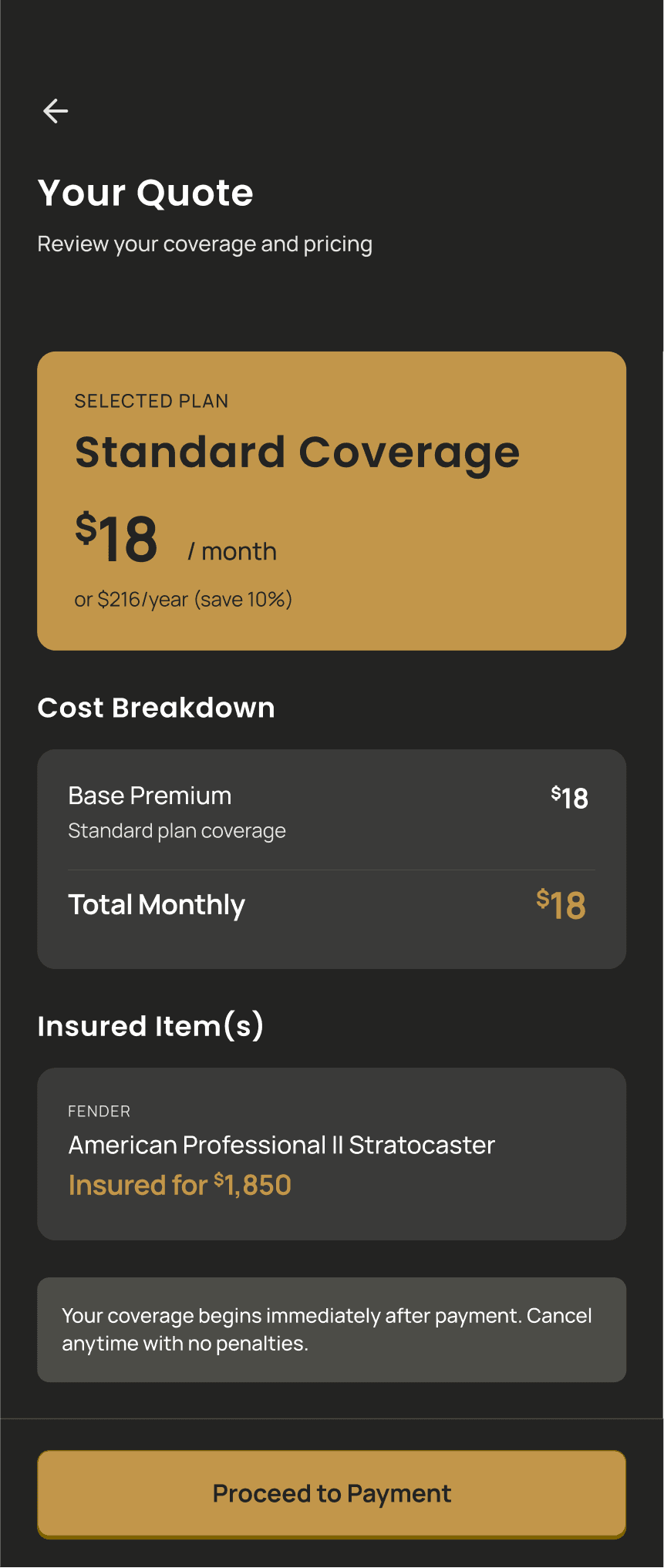
Protection & Insurance Marketplace
This was a monetization thesis made visual. The insurance flow demonstrated to early-stage investors that Tone Locker could be a community platform and a recurring-revenue protection product simultaneously.
By surfacing the "Protect this gear" upsell at the highest-intent moment - when a collector is viewing their inventory - the conversion path is contextual and low-friction.




Building the foundation
The biggest design challenge wasn't the UI - it was resisting the pull toward marketplace patterns. Tone Locker required constantly asking "what does a collector actually want right now?" rather than "what does a seller need?"
The design system work paid off immediately. With a consistent token set the team moved fast without relitigating color or type decisions. The gold-on-dark language gave the app a distinct personality in a space dominated by generic marketplace UI.